In this guide
At this point there were two possible courses of action. Often the footer concrete is poured first, with rebar placed so it runs up through the foundation walls, joining them to the footer. I wasn’t sure that was the best approach, so I decided to buy the rest of the block I needed and set the foundation walls in place first, just to make sure everything lined up.
Dry stacking
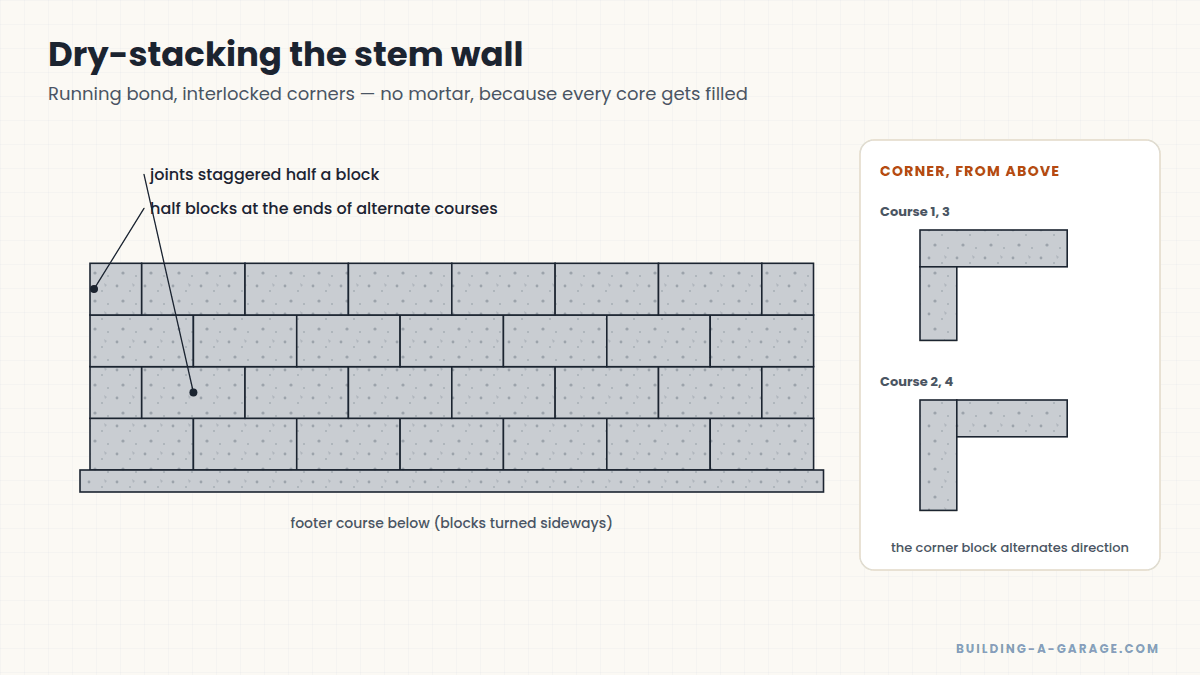
The way I stacked the block doesn’t require mortar, because the blocks would all be filled with concrete. This is called dry stacking. I was just setting everything in place, and I could pull it back up if I found I’d done something wrong.
Working around the rebar
With the footer in place, I had pieces of rebar sticking up everywhere that would go up through the foundation walls. Those bars are very dangerous — it’s far too easy to poke yourself in the eye.
Cap your rebar
Bright rebar safety caps are cheap and prevent serious injuries, including impalement if you fall. I skipped them and was very careful; I’d buy them next time.
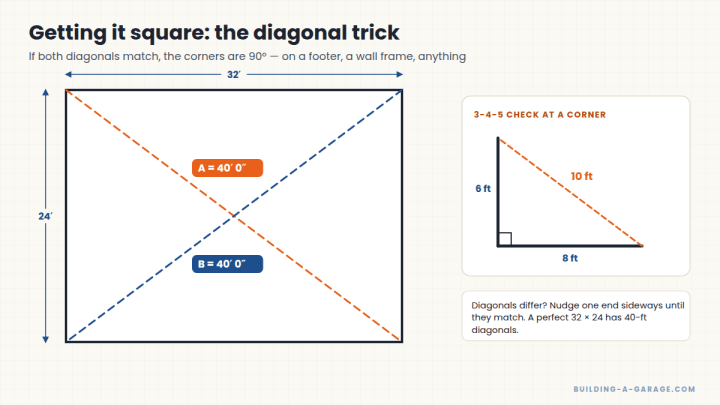
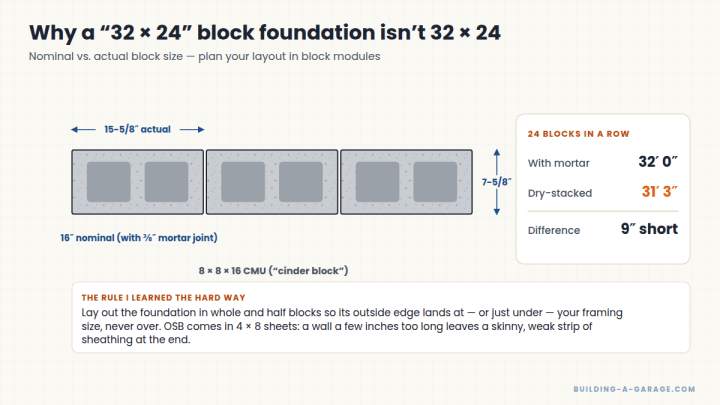
I set the wall blocks in place, lifting them over the rebar where needed (every other block). I staggered the corners so the blocks interlocked, just as you would with mortar. With the walls perfectly square and the right length, they didn’t sit perfectly centered on the footer — they were off slightly — but it wasn’t a problem. There was still plenty of support, and once concreted in, this foundation wasn’t going anywhere.
A reality check from the inspector
Now the whole foundation was sitting where I wanted it, but I wasn’t sure what came next. I also didn’t know whether the county needed to see the rebar before I poured concrete. My inspection card didn’t have a rebar inspection, but I figured it couldn’t hurt to ask.
I called the community development office and left a message. The inspector came out the next day. It was my first time meeting him, and he was about the nicest, most helpful person I’ve ever met. He said everything looked great, then asked what I planned to do next. I told him I was about to start buying bags of concrete to fill the cores.
He did some quick math and figured I needed about 5 yards of concrete to fill the cores, then asked if I realized how hard that would be by hand. He also pointed out that the cold joints I’d create would make a weaker foundation. His advice: price out a concrete truck to fill the cores. It would take an hour instead of weeks, and it would be much stronger with no cold joints.
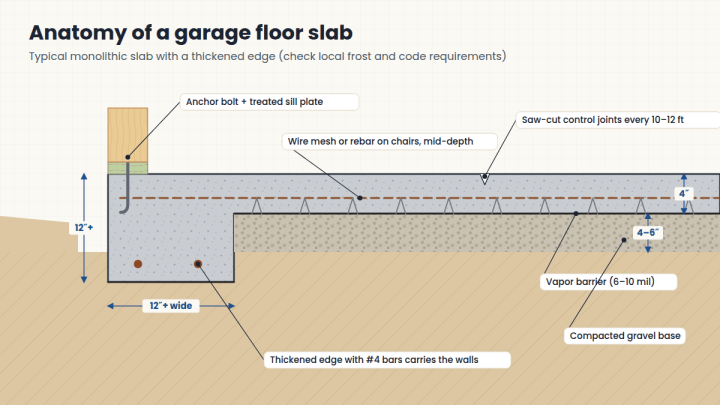
We also discussed the type of anchor bolts I’d use and how they’d be spaced, because they have to be set in the wet concrete — so that needed to be figured out before the truck arrived.
Choosing the concrete delivery
After he left, I called around and found a local concrete company that sent someone out for free to look at the site. He said the best way to fill the blocks was a conveyor truck — it looks like a normal mixer, but has a large hydraulic conveyor folded alongside the drum. The truck would only need to back part of the way up the driveway, and the conveyor could be swung around to fill the whole foundation. That’s much easier than using the chutes on the back of a standard truck, especially on a small site. We agreed on a reasonable price, and I scheduled the delivery.
Small pours, special trucks
For grouting block walls, ask about conveyor trucks, small line pumps, or a grout pump. Also ask for a “grout” or pea-gravel mix designed to flow into block cores.
Key Takeaways
- Dry-stack walls when every core will be grouted — it lets you adjust before committing.
- Ask for an inspection even if your card doesn’t require one.
- A truck delivery beats bags for anything over a yard or two.
Leave a Reply