In this guide
Roofing is the one big job I happily hired out. A roofing crew installed my shingles, ice-and-water shield and tar paper in a day — it would have taken me weeks. But whether you do it yourself or hire it, you should understand the layers so you know it’s done right.
1. Roof sheathing
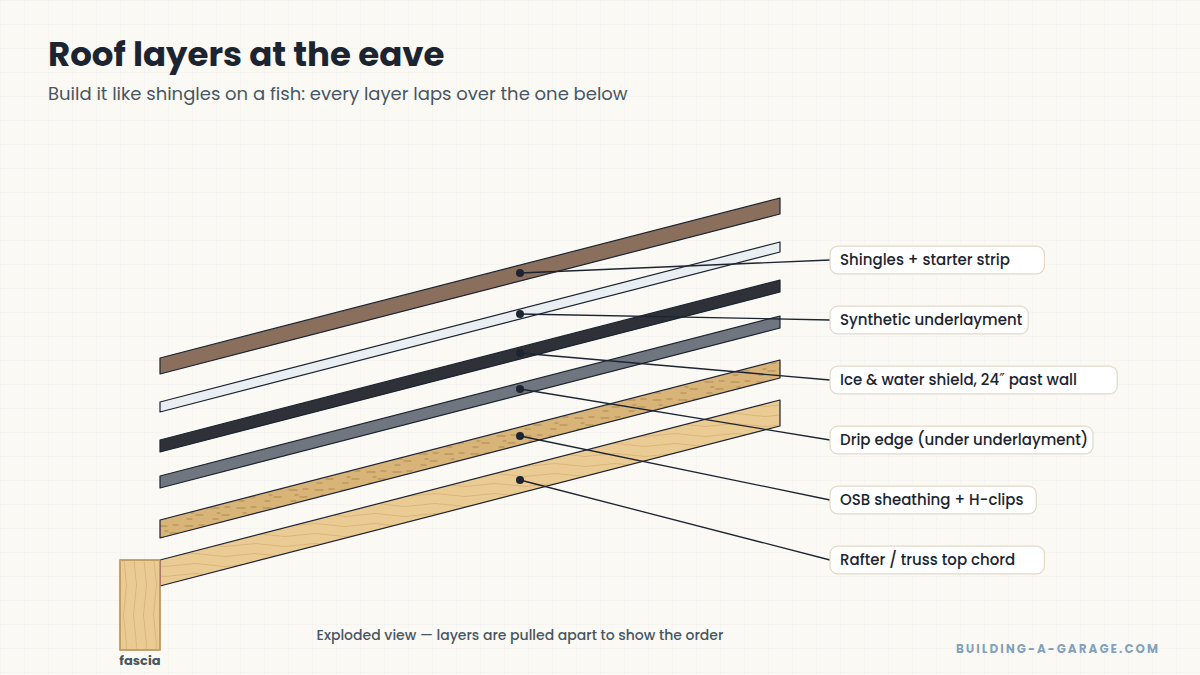
OSB or plywood sheathing is nailed to the trusses or rafters with the long edge running across them, joints staggered, and edges supported with metal H-clips between trusses. Follow your plans’ nailing schedule — roof sheathing nailing is part of what holds the roof down in high wind.
2. Drip edge at the eaves
Metal drip edge goes along the eaves before the underlayment, so water running down the underlayment drips off the edge instead of wicking into the fascia.
3. Ice and water shield
In snow country, a self-adhering waterproof membrane runs from the eave up the roof to at least 24 inches inside the exterior wall line. It protects against ice dams, where meltwater backs up under the shingles. Many roofers also put it in valleys and around penetrations.
4. Underlayment
Synthetic underlayment or roofing felt covers the rest of the deck, lapped like shingles — upper courses over lower. On the rakes (the sloped edges), drip edge goes over the underlayment.
5. Roofing
- Asphalt shingles: Start with a starter strip, follow the manufacturer’s nailing pattern exactly (it affects the wind warranty), and finish with ridge caps.
- Metal roofing: Lighter, long-lasting and sheds snow well. Screw-down panels are DIY-friendly; follow the manufacturer’s minimum pitch and fastener spacing.
Why I hired it out
Roofing is fast work for a crew and slow, risky work for one person on a ladder. Roofers also buy materials cheaper and handle the tear-off debris. Get quotes for “labor only” and “labor + materials” — sometimes the gap is surprisingly small.
Fall protection
Falls are the leading cause of death in construction. On any roof, use a harness with a roof anchor, keep the work area clean, avoid working in wet, icy or windy conditions, and set ladders at the correct angle with 3 feet extending above the roof edge.
Ventilation
Detached, unheated garages often don’t need much roof ventilation, but if you insulate the ceiling or heat the garage, plan for soffit and ridge vents to keep the attic dry. Your plans or local code will say what’s required.
Key Takeaways
- Drip edge goes under the underlayment at the eaves and over it at the rakes.
- Ice and water shield runs at least 24 inches inside the wall line in cold climates.
- Roofing is a great job to hire out — a crew does in a day what takes a DIYer weeks.

Leave a Reply