In this guide
Many garages — mine included — are left unfinished inside. But if you’ll spend time working in the garage, heat it, or live in a cold climate, insulation and an interior finish make it far more comfortable and useful.
Is it worth it?
Insulate if you plan to heat or cool the garage, use it as a workshop, or want to protect things from temperature swings. For a detached garage used only for parking, insulation is often optional. An insulated overhead door matters too; a well-insulated wall next to a thin steel door leaks heat anyway.
Wall insulation
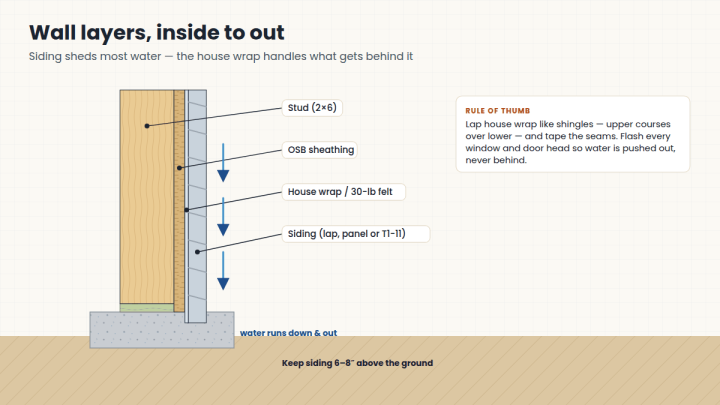
- Fiberglass or mineral-wool batts fit between studs and are the easiest DIY option. 2×6 walls fit thicker batts (R-19 to R-21) than 2×4 walls (R-13 to R-15).
- Rigid foam can go on the outside of the sheathing or inside between studs.
- Spray foam seals air leaks well but is usually a professional job.
Ceiling insulation
With trusses, blown-in or batt insulation on top of a ceiling finish works well. Keep insulation from blocking soffit vents, and add baffles so air can flow from the soffits to the ridge.
Vapor control
Whether you need a vapor retarder, and on which side, depends on your climate. In many cold climates it goes on the warm (interior) side; in other climates it can trap moisture. Follow your local code or ask your building department.
Interior finishes
| Finish | Pros | Cons |
|---|---|---|
| Drywall | Cheap, clean look, fire resistance | Dents and gouges; must be taped |
| OSB | Screw anywhere, tough | Rougher look; paint to brighten |
| Plywood | Tough, attractive | More expensive |
| Metal liner panels | Very durable, bright | Cost; harder to hang things |
Attached garages and fire separation
If the garage is attached to a house, codes typically require fire-rated drywall on the shared wall and ceiling, and a solid or fire-rated door into the house. Check your local requirements.
Paint it white
White walls and ceiling can make a garage dramatically brighter with the same number of light fixtures.
Key Takeaways
- Insulate if you’ll heat the garage or spend time working in it.
- Match insulation to your wall depth and keep attic ventilation open.
- OSB or plywood walls make hanging tools and shelves easy.
Frequently asked questions
Is it worth insulating a detached garage?
It is if you’ll heat it, cool it or spend time working in it. If it’s only for parking and storage, insulation is optional — though an insulated door and a sealed building still help protect what’s inside.
What R-value should garage walls have?
2×4 walls typically hold R-13 to R-15 batts and 2×6 walls R-19 to R-21. Heated garages in cold climates may need more in the ceiling. Check your local energy code if you plan to condition the space.
Can I leave insulation exposed in a garage?
Kraft-faced batts and foam insulation generally shouldn’t be left exposed because of fire risk. Cover them with drywall, OSB or plywood as your code requires.
Leave a Reply