In this guide
Siding makes the garage look finished, but its real job is keeping water out of the walls. The siding sheds most of the rain; the house wrap behind it handles whatever gets past. Get the layers and laps right and your framing will last for generations.
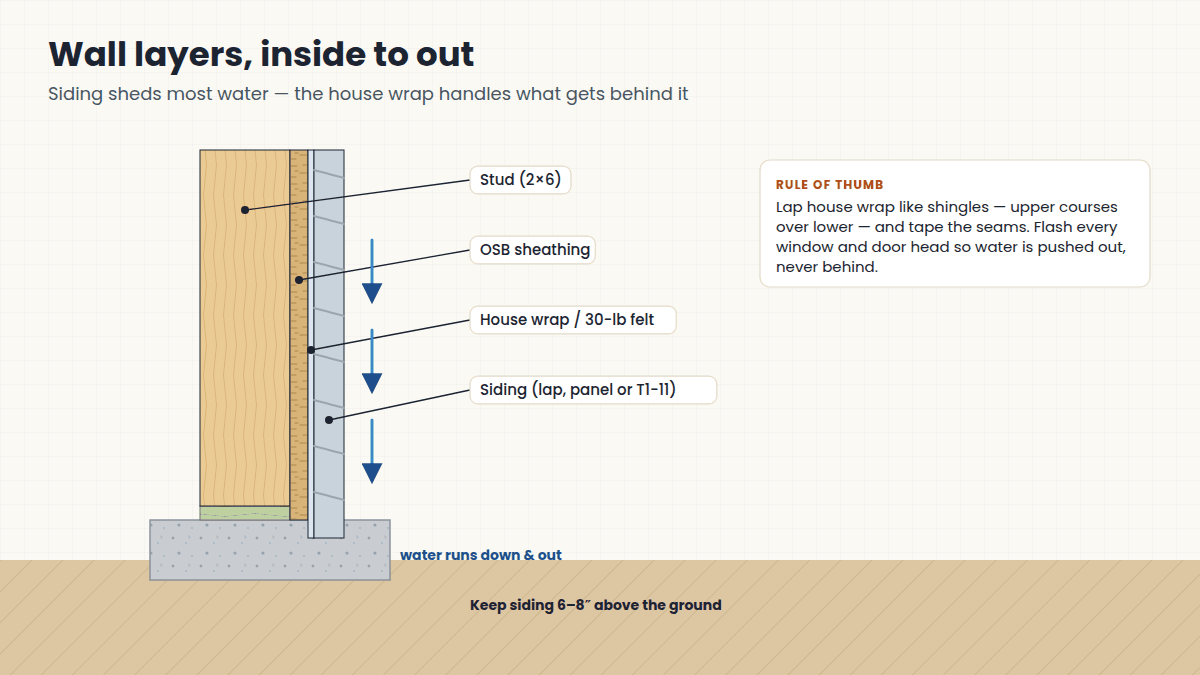
House wrap
- Start at the bottom and work up, so upper courses lap over lower ones (at least 6 inches horizontally).
- Wrap corners and overlap vertical seams by 6 to 12 inches.
- Tape seams with the manufacturer’s tape.
- Integrate the wrap with door and window flashing so water is always directed outward.
- Fasten with cap nails or cap staples, not plain staples.
Siding options
| Siding | Cost | DIY-friendly | Notes |
|---|---|---|---|
| T1-11 / panel siding | $ | Very | Fast to install, doubles as sheathing on some sheds; needs paint or stain |
| Engineered wood (lap or panel) | $$ | Very | Looks like wood, lighter than fiber cement, pre-primed |
| Vinyl | $–$$ | Moderate | Low maintenance; must be installed loose to allow movement |
| Fiber cement | $$–$$$ | Moderate | Durable and fire-resistant; heavy, and cutting creates silica dust |
| Metal | $$ | Moderate | Matches metal roofs; dents; great for shops |
Trim and details
- Keep siding 6 to 8 inches above the ground (or as the manufacturer specifies) so it doesn’t wick moisture or rot.
- Install flashing above doors and windows and where siding meets trim.
- Use corner boards or corner trim to cover the ends of lap siding.
- Caulk only where the manufacturer says to — some joints need to breathe and drain.
Match the house
A garage that echoes the house’s siding, trim color and roof pitch looks planned instead of added on — and helps resale value.
Cutting fiber cement
Cutting fiber cement releases crystalline silica dust. Use shears or a saw with dust collection, cut outdoors, and wear a proper respirator.
Key Takeaways
- House wrap laps like shingles and ties into your flashing.
- Choose siding for your budget, climate and how much maintenance you want.
- Keep siding off the ground and flash every opening.
Frequently asked questions
Do I need house wrap under garage siding?
Most building codes require a weather-resistive barrier behind siding, and it’s cheap insurance for the sheathing. Some panel sidings are rated to serve as both sheathing and siding on unheated buildings — check the manufacturer’s instructions and your inspector.
What is the cheapest siding for a garage?
Panel siding like T1-11 or engineered-wood panels is usually the least expensive and fastest to install. Vinyl lap siding is also economical. Factor in paint and maintenance costs over the life of the building.
How far above the ground should siding be?
Typically 6 to 8 inches above soil, and often 1 to 2 inches above paved surfaces or roofs, but follow the siding manufacturer’s requirements.
Leave a Reply