In this guide
You framed the pedestrian-door opening back in the wall-framing phase. Now it’s time to hang the door. A pre-hung exterior door comes already mounted in its frame with hinges attached, so the job is mostly about getting it plumb, square and sealed.
Prepare the opening
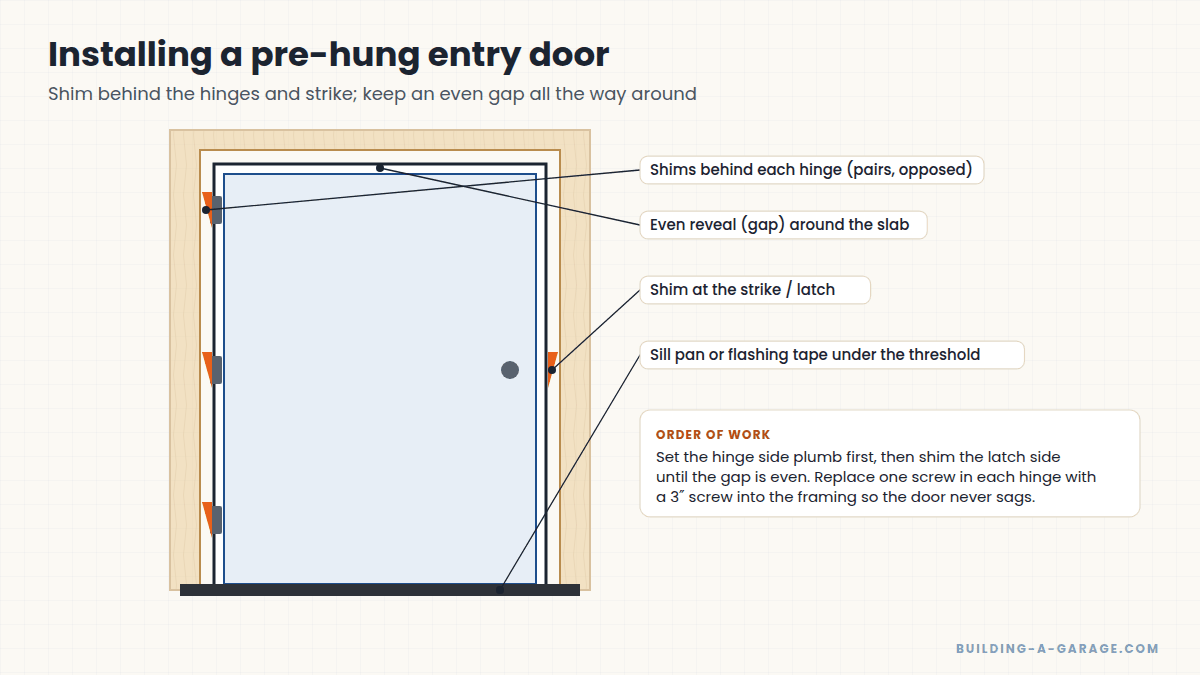
- Check that the rough opening is plumb, square and about ½ to ¾ inch larger than the door unit.
- Make sure the floor (the slab or foundation under the threshold) is level. Shim the sill if needed so it’s fully supported.
- Flash the sill with a sill pan or flexible flashing tape that turns up the sides, then flash the sides and head, lapping so water runs out and down.
Set the door
- Run beads of sealant under the threshold and behind the exterior trim (brick molding).
- Tip the door into the opening, center it, and tack the hinge side temporarily.
- Plumb the hinge side first. Shim behind each hinge with opposed pairs of shims so the jamb stays straight.
- Shim the latch side at the strike and at the top and bottom until the gap (reveal) between the door and frame is even all around.
- Check that the door swings, latches and stays put when opened partway.
Fasten and finish
- Nail through the jambs at the shims, not between them.
- Replace one screw in each hinge (the one closest to the weatherstripping) with a 3-inch screw into the framing so the door never sags.
- Fill the gap around the frame with low-expansion door-and-window foam, not regular expanding foam.
- Install the lockset and deadbolt, then trim the inside.
Consider security
Garages hold expensive tools. Use a solid-core or steel door, a deadbolt with a reinforced strike plate, and 3-inch screws in the strike and hinges.
Key Takeaways
- Flash the sill before the door goes in.
- Plumb the hinge side first, then shim for an even reveal.
- Long screws at hinges and strike prevent sag and improve security.
Frequently asked questions
What size rough opening does a 36-inch exterior door need?
A common rough opening for a 36×80 pre-hung exterior door is about 38 inches wide by 82½ inches tall, but it varies by manufacturer and threshold. Always check the specific door’s instructions.
Should a garage entry door swing in or out?
Most swing in, which protects the hinges from the outside and keeps the door from being blocked by snow. An outswing door saves interior space and resists being forced open, but needs security hinges.
What kind of foam should I use around a door frame?
Use low-expansion foam labeled for windows and doors. Regular expanding foam can bow the jambs and make the door bind.

Leave a Reply