In this guide
Overhead garage doors are the biggest moving parts on your building, and they influence the framing more than anything else. Pick the door early — ideally before you frame the front wall — and frame to the manufacturer’s chart.
Door sizes and styles
- Widths: 8 or 9 feet for single bays (9 feet is far more forgiving) and 16 feet for doubles.
- Heights: 7 feet standard, 8 feet for trucks and roof racks, 10 feet or more for RVs and campers.
- Materials: Steel (most common, affordable, low maintenance), wood (beautiful but high maintenance), aluminum and glass (modern look, less insulation) and composite.
- Insulation: Insulated doors are quieter, stiffer and dent less, and they matter if you’ll heat the garage.
Framing clearances
The door installs behind the opening, so it needs room around it for the tracks, springs and opener.
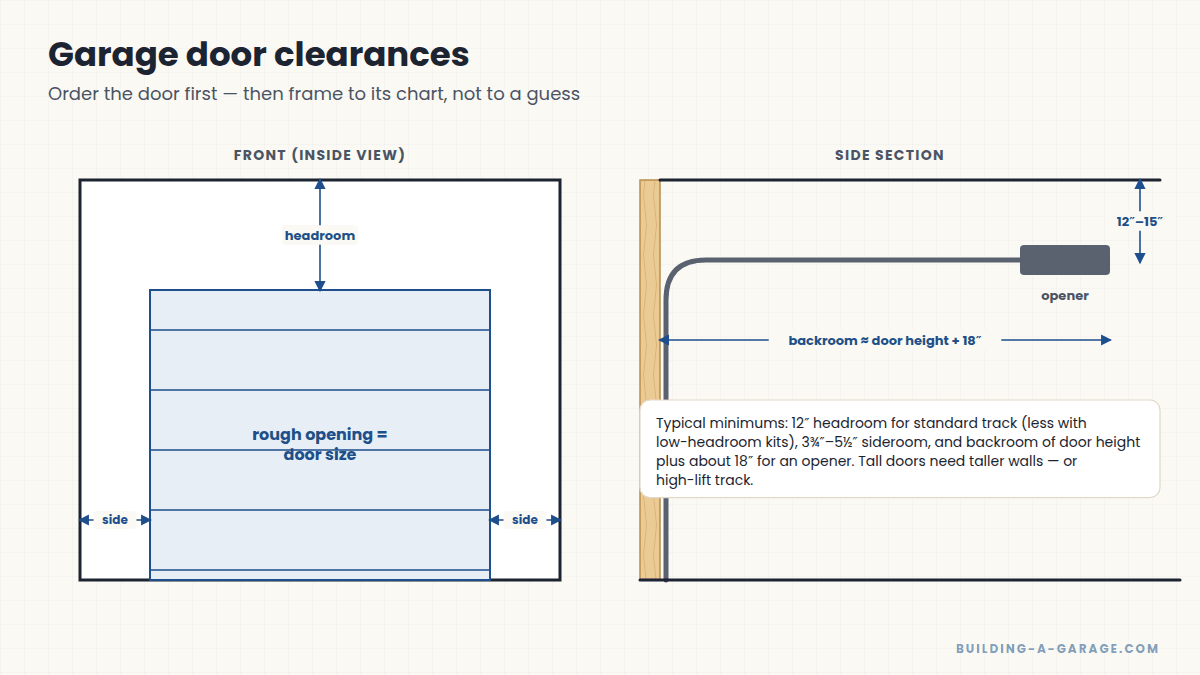
| Clearance | Typical need | Why |
|---|---|---|
| Headroom (above opening) | About 12″ for standard track; less with low-headroom kits | Springs, track radius, opener |
| Side room (each side) | About 3¾″–5½″ | Vertical tracks and brackets |
| Back room (depth) | Door height + about 18″ with an opener | Horizontal tracks and opener rail |
Always use the specific numbers from your door’s installation manual — they vary by door and spring system.
Installing the door
Garage doors come as kits: sections, tracks, rollers, hinges and a spring system. Many homeowners install their own doors by following the instructions carefully, which usually means:
- Setting the bottom section level on the floor and stacking the sections with hinges.
- Installing the vertical and horizontal tracks and hanging the rear track supports from the framing.
- Installing and winding the spring system — the hazardous part.
- Adjusting the door so it’s balanced and travels smoothly, then installing the opener.
Leave torsion springs to a pro if you’re unsure
Garage door springs store enough energy to cause serious injury. Winding or adjusting torsion springs requires proper winding bars and a strict procedure. If you’re not completely confident, have a garage door technician install or tension the springs.
Openers
Chain drives are the cheapest and loudest; belt drives are quiet; wall-mounted (jackshaft) openers save ceiling space and are popular with high-lift track. Plan a ceiling outlet for each opener and, if you want, a keypad and a battery backup.
Key Takeaways
- Choose your doors before framing the front wall.
- Frame to the door’s headroom, side-room and back-room chart.
- Springs are dangerous — hire a pro if in doubt.
Leave a Reply